02 / The review
7 CHAPTERSWhat happens after revenge ends?
The screenplay moves in two distinct rhythms. Its first half sinks slowly into Frank's pain, while the second erupts into violence as though silence can no longer contain him. Frank has completed his mission and killed his enemies, but peace never arrives. What replaces the mission is not calm, but a void.
The repeated memories, hallucinations and scenes of isolation accurately reflect a mind trapped in one moment. That psychological honesty is also the structural weakness: the opening becomes exhausting, then Ma Gnucci's arrival forces an abrupt shift from internal reflection to external siege without enough transition.
A simple premise carrying too many burdens
At its core, the story is simple and effective: a man who has lost his purpose is forced to fight again and finds a reason to live. Yet the film also attempts to cover PTSD, family history, the moral meaning of the skull, an old revenge plot and preparation for future events in roughly fifty minutes.
The result is crowded rather than balanced. Several threads begin without earning a full conclusion, while the trauma material repeats ideas already explored in the original series without enough new development. The film has depth, but does not always have the time to build that depth organically.
Revenge does not liberate—it empties
The screenplay's best idea is philosophical rather than physical. Frank is not a winner after revenge; he is a broken man emptied by it. He kills not from strength, but from the absence of anything else capable of moving him forward.
The skull, once a symbol that terrified criminals, becomes a burden when corrupt people adopt it. This raises the film's most important question: was Frank's campaign justice, or did it open a door to wider chaos? The question gives the internal conflict real weight, although it is stated more directly than it is developed.
Frank and Ma Gnucci reflect each other
Frank is written as a man on the edge of collapse. His journey is not toward victory, but toward recovering a reason to continue. The final movement from wanting death to accepting another war is clear, yet too rapid; it occurs partly because the plot needs it rather than because every emotional step has been earned.
Ma Gnucci is his dark reflection. She has also lost a family, but chooses revenge as an identity. Her presence makes the conflict personal and Judith Light gives her cold grief and controlled menace, yet the character enters strongly and disappears without the full climax her role promises.
A siege directed from inside Frank's mind
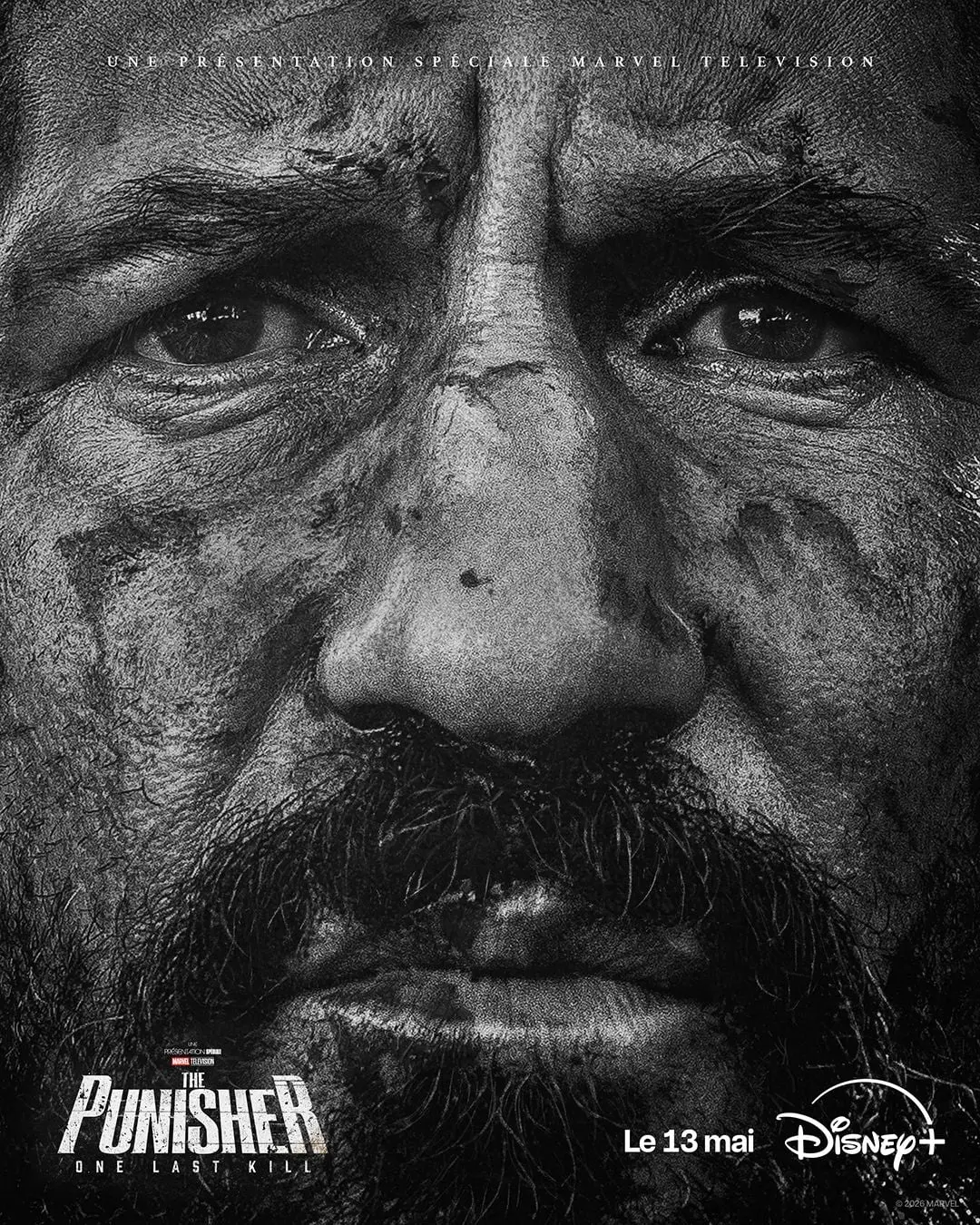
The direction seeks suffocation rather than spectacle. The apartment is not merely a location, but a psychological prison. Tight close-ups, restricted movement and constant attention to fatigue make Frank feel trapped even before his enemies enter.
This visual approach honestly serves the character, but the sudden change from quiet introspection to violent action damages the flow. The film understands both halves separately; it does not completely discover how to connect them.
Jon Bernthal carries the film through silence
Bernthal performs with his body before his words: sharp cries, empty looks and heavy movement that seems to carry the weight of years. His best moments are not the fights, but the pauses in which Frank looks at himself, breaks down or hesitates.
The supporting characters, including the shop owner, provide brief human reminders of what Frank still protects. The performances are consistently strong, with Bernthal supplying the emotional foundation when the writing becomes overfilled.
Editing that understands trauma better than action
Rapid, disorienting cuts work well during hallucinations and breakdowns because they reproduce an unstable mind. In the action scenes, however, the same sharp cutting interrupts movement and reduces the impact of violence by ending beats before they fully land.
The production design is simpler and more effective. A cramped, chaotic apartment, a deteriorating neighborhood, fire, blood and broken furniture all make the environment collapse alongside the character rather than merely surrounding him.
03 / Final verdict
Final verdict
The Punisher: One Last Kill resembles Frank himself: powerful at its core, but burdened by wounds. It begins with psychological honesty and explores the emptiness after revenge with unusual care, then rushes toward an ending that weakens its balance. It is neither a failure nor a complete work, but an attempt to stand again. It does not give us a victorious hero, only a man who chooses to continue—even if continuing means accepting a war that never ends.