02 / The review
5 CHAPTERSA lighter sin creates a weaker wound
The 1997 film built its guilt around a direct, morally ugly act. Here the inciting accident is softened into reckless behavior with less deliberate responsibility. That choice makes the friends easier to defend, but it also removes the poisonous guilt that should drive every silence, accusation and betrayal.
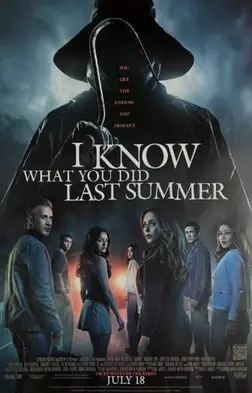
When the threat returns after a year, the film follows a familiar path: the hook-wielding killer appears, distrust grows and the group begins to fall. The pattern can still work, but the screenplay rarely makes these deaths feel like the inevitable return of a buried crime.
Ideas introduced and quickly abandoned
Class corruption, elite development projects, the deliberate erasure of a town's history and the true-crime economy could have connected private guilt to a community built on denial. Instead, these themes remain suggestive fragments rather than a coherent dramatic argument.
The return of Julie James supplies nostalgia, but nostalgia is used as an event rather than as a meaningful confrontation between generations. Even the language of trauma often functions as a quick label for the characters instead of a force shaping their behavior.
A slasher that cannot control its pace
At 111 minutes, the film is unusually long for a story powered by pursuit and suspense. Early murder sequences carry energy, but the middle stretches thin and the final movement accelerates without recovering the tension that was lost.
The editing magnifies the instability. Slow passages do not deepen character, while sudden bursts of violence arrive before the surrounding drama has built sufficient pressure. What should feel like rising panic instead feels like separate peaks joined by empty road.
Technique without a nightmare
Jennifer Kaytin Robinson moves between solemn legacy horror and bloody self-awareness without settling on either. The night photography is technically polished, yet much of the lighting remains too flat to turn the town into a memorable place of dread.
The production design represents a believable small town, and the score gestures toward the sound of 1990s slashers. Neither element becomes a distinctive identity. The craft is competent, but competence alone cannot make a revival necessary.
Performances searching for stronger material
Chase Sui Wonders gives Ava presence and emotional clarity despite the thin writing. The rest of the ensemble ranges from solid to forgettable, with few characters receiving the specificity needed to make their deaths genuinely painful.
The dialogue does them no favors. Direct explanations and internet-flavored lines often sound designed to announce the film's awareness of contemporary culture rather than to reveal how these particular people speak under fear.
03 / Final verdict
Final verdict
This is a revival without a soul strong enough to justify its return. Scattered kills and polished images cannot compensate for a weak moral center, unstable rhythm and an identity assembled from memories of a better film. The past, once again, proves more frightening—and more entertaining—than the present.