02 / The review
4 CHAPTERSSeason one: a patient, intelligent foundation
The first season uses familiar ingredients—a training arc, entrance tests and a concealed double identity—but gives them emotional purpose. Kafka's promise to childhood friend Mina, Reno's quiet support and Kikoru's gradual escape from the arrogant-prodigy template make the Third Division feel like a community rather than a collection of combat statistics.
Its slow burn works because almost every battle changes a relationship or reveals character. The unanswered origin of the kaiju and the limited view of the wider defense system remain weaknesses, yet Kaiju No. 9's intelligence sustains tension and hints that the monsters are evolving beyond instinct.
Season two: expansion without a stable center
Once Kafka's identity is exposed, the story shifts from pursuing a dream to political and military containment. Characters are scattered across units, Gen Narumi takes greater space and No. 9 becomes an existential threat. The widening scale is ambitious, but the early meetings, abrupt escalation and extremely open ending create the sense of a transition chapter rather than a complete season.
The loss of Isao Shinomiya and Kikoru's confrontation with her father's legacy carry genuine emotional weight. Yet that material also sidelines Kafka: the theme of age nearly disappears and he starts to feel like a strategic weapon rather than a man fighting to preserve his identity.
Characters, identity and the meaning of strength
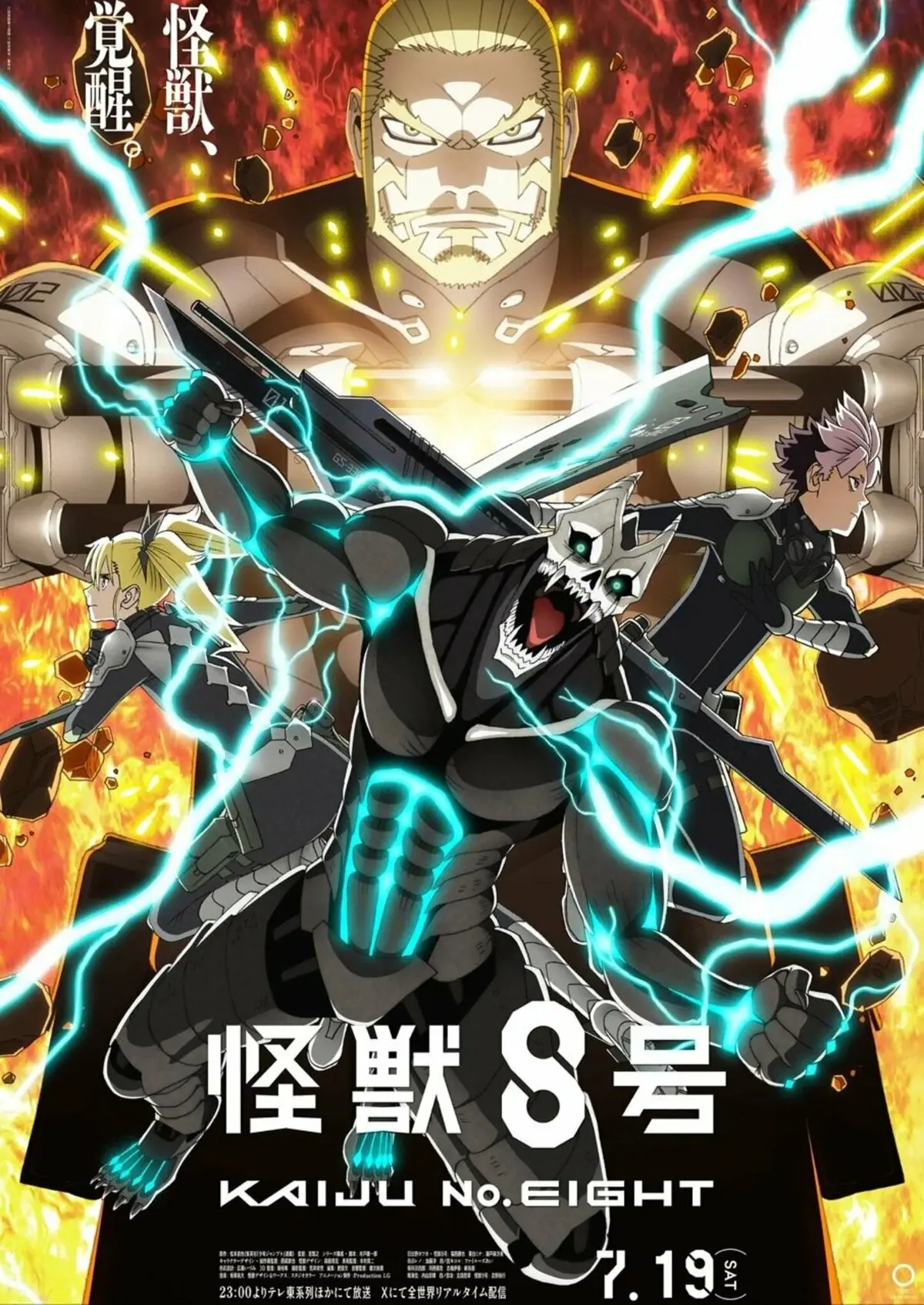
Kafka is the emotional engine: earnest, funny, occasionally naïve and defined by persistence rather than genius. Reno supplies calm intelligence, Hoshina balances menace with humor, and Kikoru grows through grief and crushing expectations. No. 9 is most effective when observing and adapting, turning the conflict into a question of whether monsters can organize, think and perhaps merge more deeply with humanity.
Direction and animation: scale with uneven pressure
Season one balances wide shots that sell the weight of tanks and kaiju with close human reactions and welcome pauses before battle. Season two becomes more static during long military conversations, although Isao's confrontation with No. 9 restores focus and visual discipline. The varied creature designs and Kafka's demonic silhouette avoid simple Godzilla imitation.
The 2D/CG blend is generally convincing in the first season and more exposed in some rapid second-season encounters. Even so, Kafka's transformations retain energy, the best impacts carry real mass, and the vocal performances—especially Kafka's shift from comic warmth to monstrous force and Kikoru's grief—keep the characters alive when the image is less dynamic.
03 / Final verdict
Final verdict
Kaiju No. 8 is more than a monster-fighting series: at its best, it is about someone late to life's race asking for one honest second chance. Season one captures that idea with warmth and balance; season two grows more ambitious but loses focus. The planted dramatic seeds remain strong—provided the next chapter returns to Kafka's human struggle instead of becoming only an arms race.