02 / The review
7 CHAPTERSA family that is neither together nor gone
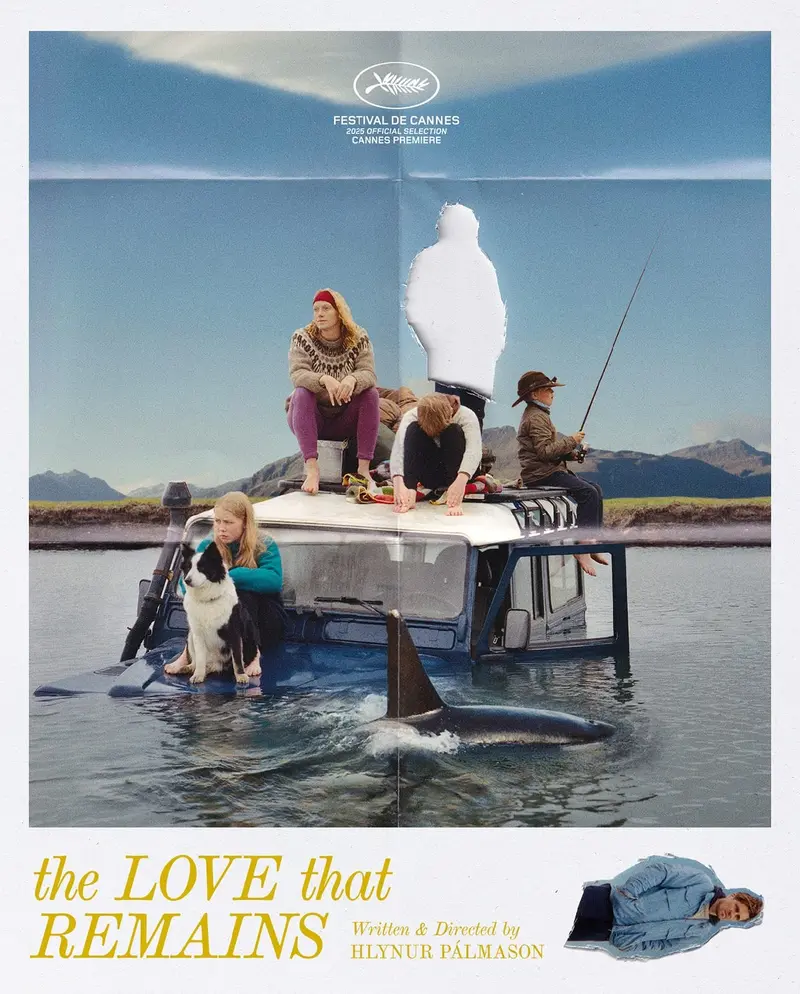
Magnus works aboard a herring vessel and returns in hesitant visits to a house he no longer knows how to call home. Anna protects her artistic life while raising their three children alongside a man who still awakens anger, pity and traces of the affection that once bound them. Neither person is presented as the innocent victim or sole cause of the collapse.
That balance is one of the film's greatest virtues. Separation stories easily become trials, but this one watches instead of condemning. Magnus has lost his place within the family; Anna carries the practical and emotional weight their marriage no longer shares. Every meeting contains old warmth and new tension at once.
A memory album instead of a conventional plot
The film does not move neatly from the cause of the separation to its consequence. It is assembled from fragments: a family outing, work at sea, a kitchen glance, a small quarrel and a dream whose reality is uncertain. Each scene carries a feeling, then yields to another connected less by chronology than by the characters' inner state.
This is appropriate because old relationships are rarely remembered as an ordered timeline. We recall gestures, jokes, silences and the hand that hesitated before touching another. Yet the form is also the film's main demand. Viewers waiting for a decisive confrontation or explanatory scene may feel that the images drift without direction. The film refuses tidy closure because the emotions it observes do not possess it.
Magnus floats while Anna rebuilds
At sea, Magnus is isolated inside cold gray expanses; on land, he discovers that his family has learned to continue without him. The sea becomes an image of his interior condition—surrounded by colleagues yet alone, following a clear route while emotionally lost. Distance may be work, escape or both, but it leaves him unable to recover his former place.
Anna belongs to earthier materials—wood, iron and rust that she reshapes into art. When a crane lifts her waterfront studio away, the image mirrors the dismantling of her marriage and artistic identity. Unlike Magnus, she stands inside the wreckage prepared to make something new from what remains. Acceptance does not mean she is unhurt; it means she is more willing to move with change.
Iceland does not care—and that makes it tender
Pálmason never uses nature as decorative scenery. Wide frames place the family as small bodies against coast, snow and open land. Their crisis is enormous within their lives and irrelevant to the landscape. Wind continues, water moves and mountains remain whether the family reunites or divides.
That indifference is not purely hostile. Empty spaces warm when children fill them with play, laughter and imagination. The contrast between an immense landscape and a private crisis creates the film's visual power: the characters cannot control their lives or the world, but can still produce a temporary island of intimacy inside both.
A giant rooster and a bomb from the past
Surreal intrusions split the domestic realism without warning. A giant rooster stalks Magnus's nightmare like wounded masculinity enlarged until it becomes grotesque, comic and frightening. An old wartime bomb rises in his fishing net as though a buried past has returned carrying its original capacity to explode.
A falling sword, an old helmet and an archery game that nearly becomes tragedy keep play and threat beside one another. These images are not strangeness for its own sake. They externalize feelings the characters cannot articulate. Without them, the film might have remained a perceptive but familiar family drama; with them, emotion becomes physical and unpredictable.
Bodies, glances and the children between them
Sverrir Guðnason builds Magnus from stooped shoulders, exhausted eyes and hesitant approaches to his children. He is not innocent, but he is painfully aware that the family can function without him. His return becomes ghostlike: he knows every detail of the house and loves everyone inside it, yet no longer understands his status there.
Saga Garðarsdóttir gives Anna equal complexity. A look at Magnus can contain unresolved anger, unwanted pity and a moment of old tenderness before memory restores the distance. The three real-life children add spontaneity that cannot be manufactured. Their laughter and small gestures prove that a marriage can end without erasing the family it created.
Beauty, fragmentation and emotional honesty
The visual design uses symmetry, depth and physical distance to express separation. Anna's earth tones, rust and wood stand against the gray metal of Magnus's vessel: one world is damaged but remoldable, the other rigid and trapped inside maritime routine. Piano and jazz inflections keep melancholy beside deadpan humor rather than letting the film drown in grief.
The fragmented construction is not equally successful throughout. Some scenes continue after their meaning has arrived, and several symbols repeat an emotion the audience already understands. Sudden movement between realism and fantasy may also frustrate viewers who want clear borders. Yet literal truth is not the goal. A fantasy can reveal a real feeling even when the event itself never occurred.
03 / Final verdict
Final verdict
The Love That Remains is a mature film about endings that do not fully end. It does not claim that love repairs everything or that children can restore a broken marriage. What survives between Magnus and Anna is not pure romance but a difficult mixture of compassion, nostalgia, anger and responsibility. Nature and surreal imagery give that mixture a distinctive cinematic form, while the performances and children's spontaneity keep it human. Its fragmented rhythm requires patience and may place distance between the film and some viewers, but it never manufactures reconciliation or emotion. It simply watches a family lose its old shape without losing everything that once joined it. A marriage may end and a home may change, yet something small continues to live between its people. That is the love that remains.