02 / The review
7 CHAPTERSThree men and three shades of morality
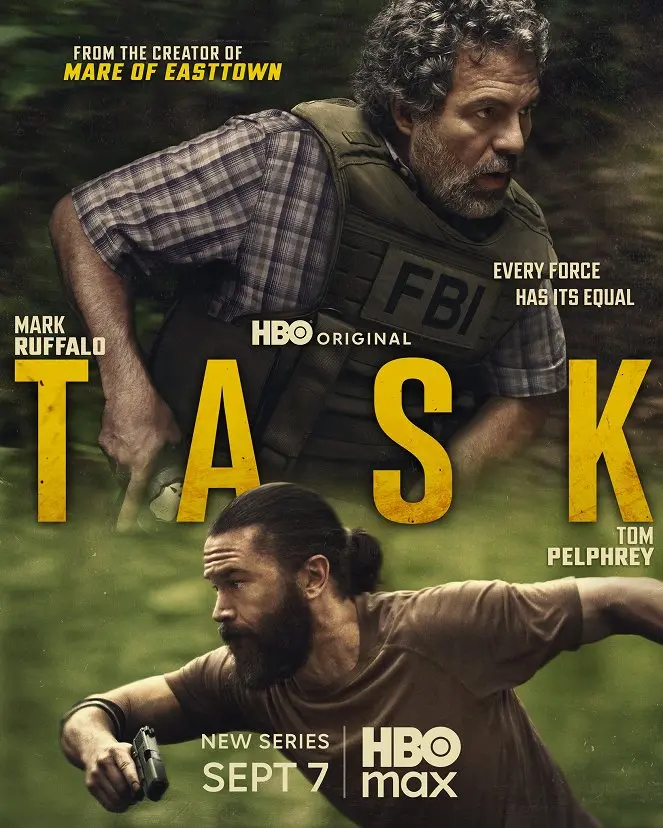
The screenplay is organized around three figures: Tom, a fundamentally good man; Robbie, a deeply flawed man who remains understandable; and Perry or Jason, whose coldness gives evil a more definite form. The structure is not simply good versus bad, but an examination of moral gradation.
The opening episode establishes relationships and internal conflicts with impressive precision. As the season grows more dependent on thriller mechanics, some turns feel less organic, but they never completely destroy the moral foundation built at the beginning.
A chain reaction rather than a mystery
Robbie's crew initially robs drug houses for reasons that are criminal yet psychologically comprehensible. Each apparently logical choice creates a larger escalation until revenge becomes a cycle of violence no one can control.
Tom's task force occupies its own gray space. The law must be enforced, but law does not produce complete moral certainty. The series understands that no one leaves this interaction innocent and that every attempt to correct one wrong can create another.
Is remorse enough?
The season repeatedly asks whether regret can replace punishment. Anthony knows that he is guilty, and his injury and request for atonement suggest that some people punish themselves more relentlessly than the law could.
Tom forgives Ethan but does not grant Anthony the same mercy. The difference is not simply the crime. It concerns awareness, control and responsibility, allowing forgiveness to remain difficult rather than sentimental.
Children inherit the unpaid debts
Task is ultimately a series about psychological inheritance. Jason grows from Perry's permissiveness, Ethan from emotional neglect and Sam becomes a delayed possibility of rescue. Parents' failures continue through children who did not choose them.
Tom's decision to let Sam go is one of the writing's most mature moments. He places the child's welfare above his own need to repair guilt, recognizing that atonement cannot turn another person into a tool for self-forgiveness.
Tom Brandis carries the moral burden
Tom is an FBI agent, former priest, wounded father and man still trying to understand mercy. His greatest confrontations are not arrests, but decisions about when to punish, forgive or consciously look away.
The screenplay gives him rare room for contemplation, especially in his relationships with Ethan and Anthony. He becomes a moral center without becoming morally perfect, which is essential to the series' refusal of easy answers.
Robbie's understandable tragedy
Robbie is a classical tragic figure: he tries to protect the people he loves and repeatedly chooses the wrong method. The series never excuses him, but his decisions grow from grief rather than simple greed, making his fall painful and convincing.
Perry embodies organized evil and hypocrisy, preaching loyalty while betraying it. Jason is the product of that corrupted authority: someone never stopped at the correct moment, until violence became identity.
A strong foundation, a looser second half
The series excels through layered characters, calm dialogue, mature treatment of forgiveness and a conclusion that respects the main arcs. Psychological drama and thriller tension usually support rather than cancel each other.
Its weaknesses emerge through crowded side stories, secondary characters who disappear early, convenient coincidences and episodes that could be shorter. The second half is less precise than the opening, even though the emotional direction remains clear.
03 / Final verdict
Final verdict
Task offers no complete salvation. Justice arrives only partially, forgiveness is measured carefully and loss remains present. The season's first half is more controlled than its later thriller machinery, but the moral complexity and humane writing hold it together. Its central truth is that the heaviest battle is not against criminals, but against guilt that refuses to disappear.