02 / The review
7 CHAPTERSNoir begins in black and white
The black-and-white opening in Tokyo immediately establishes the classical noir tone and introduces John Sugar as poetic, observant and full of contradiction. Colin Farrell's voice-over blends cinephile nostalgia with compassionate personal reflection, giving the detective an inner life before the plot properly begins.
As the investigation advances, small physical disturbances, nervous reactions and strangely withheld information create the sense that something unreal is hidden inside this highly polished reality. The season's initial attraction comes from this tension between genre familiarity and an invisible rupture.
A missing woman inside a Hollywood dynasty
The initial case is traditional and attractive: a private detective searching for the missing Olivia, granddaughter of a powerful producer. Every early element—the tensions inside the Siegel family, Olivia's past and Sugar's own hesitation—appears designed to deepen that mystery.
The screenplay walks a difficult line between old-fashioned investigation and modern fragmentation. Its dialogue contains intelligent film references, but sometimes hints at a larger meaning without delivering enough substance in the moment. Mystery is built through concealment and gradual disclosure, occasionally stretching scenes as preparation for a revelation it refuses to name.
The science-fiction reveal arrives too late
When the season reveals that Sugar is an alien, the case, his behavior and the moral questions around him are immediately reframed. The idea is bold and genuinely interesting. The problem is not the turn itself but its timing: episode six of an eight-episode season leaves too little time to rebuild our emotional relationship with everything that came before.
The series plants clues, but it does not provide enough narrative room after the reveal for the audience to process their new meaning. An ambitious reversal needs not only preparation but consequence. Sugar gives us the former in fragments and compresses the latter into the final stretch.
Direction built from cinema memory
The direction confidently combines classical iconography with contemporary technique. Handheld movement and rapid cutting inside conversations create nervous anticipation, while the shifts between black and white and color connect objective reality with Sugar's private cinephile imagination.
Los Angeles is photographed through a lens in love with the 1940s and 1950s without abandoning modern production polish. Night, shadow, reflective glass and carefully controlled contrast deepen the psychology of each scene. The visual identity remains coherent even when the story changes genre beneath it.
Editing that places us inside Sugar's mind
The editing is strongest when it inserts fragments from classical films and rapidly connects images across different eras. The technique makes time feel layered and suggests that Sugar experiences the world through an archive of cinema rather than through ordinary memory.
The pattern is repeated often enough that it loses some of its initial force. What first feels like an expressive interruption can later resemble a signature the series inserts because it has become expected. Even so, the montage remains central to the show's personality.
Music and production design complete the illusion
The score carries jazz, melancholy and mystery without announcing itself too aggressively. It seeps into the scene, supporting suspense and becoming particularly effective during the quieter human moments rather than only during pursuit or revelation.
Production design is another pillar. Sugar's office, home, nightclubs, vintage cars, old film magazines and hotel interiors create a world suspended between an imagined past and the present. The locations are not decorative references; they allow the detective's obsession with cinema to become physical space.
Colin Farrell carries the contradiction
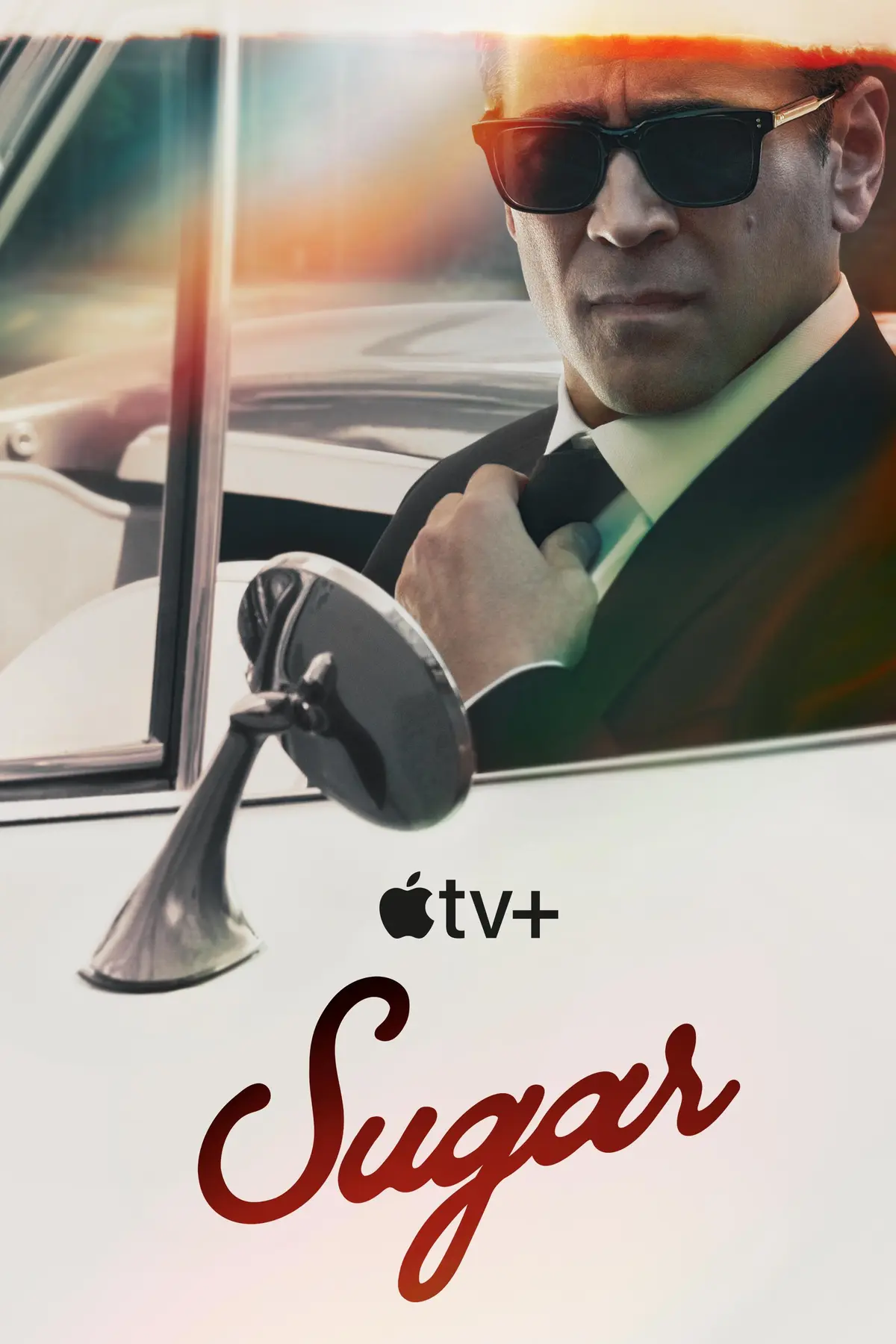
Colin Farrell gives one of the season's defining performances. John Sugar is not simply a stylish detective; he is fragile, compassionate and burdened by something he cannot explain. Farrell's still body language and warm, wounded voice make that contradiction persuasive.
The supporting cast is more uneven. James Cromwell and Dennis Boutsikaris leave strong impressions, while characters such as Ruby and Melanie feel incomplete or underused. The imbalance becomes more visible after the central revelation, when every relationship needs renewed meaning and not all of them receive it.
03 / Final verdict
Final verdict
Sugar is an audacious artistic experiment that tries to break familiar narrative forms through cinema history, psychological noir and an unexpected science-fiction identity. Its risk produces a distinctive visual and emotional experience, but the final third struggles to contain the mystery created by that risk. The late reveal does not ruin the season; it simply arrives too late for the season to explore its full consequences. Sugar will appeal most to cinephiles and viewers willing to follow a detective story into a completely different genre, but its ambition and its structural imbalance are impossible to separate.
Your turn