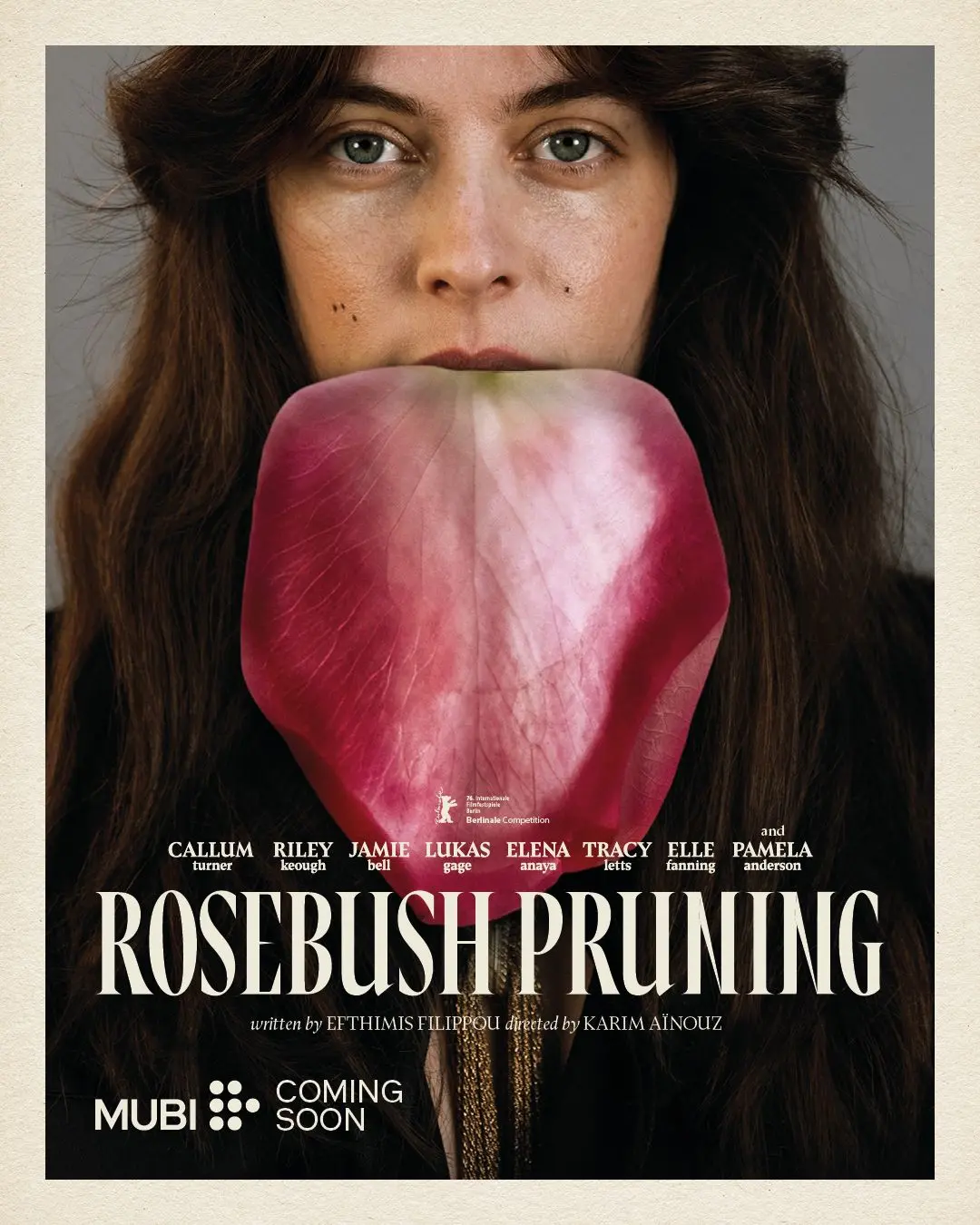
02 / The review
9 CHAPTERSA beautiful villa without life
The modern villa on the Catalan coast is a direct extension of the family's condition. Everything is clean, elegant and expensive, yet nothing in its beauty feels alive. Edward, Anna, Robert and Jack possess every material comfort while remaining without purpose beyond the walls of the estate.
The film's satire therefore connects wealth to isolation and isolation to psychological distortion. These people do not suffer from deprivation but from excess: lives filled with objects and emptied of meaning. What happens when a person receives everything except a reason to live?
Edward sounds rational because nobody challenged him
Edward is the most important character because he is the most skilled at convincing himself that his impulses are rational. He invents aphorisms, speaks with total confidence and rarely needs his ideas to survive contact with reality. A sheltered environment has taught him that confidence is enough to make nonsense sound like truth.
His attachment to George, the Greek doctor he meets, offers the first glimpse of another life. But Edward does not know how to leave his family normally. His desire for freedom becomes a project of violently rearranging other people's lives, revealing that liberation and domination have become indistinguishable inside him.
Jack is the only person trying to escape
Jack is the sibling most connected to the outside world. His relationship with Marta and his awareness that the family dynamic is abnormal place him in a different position, but the film refuses to make him an uncomplicated hero. He knows the family harms him and still cannot sever the bond.
Jack's sense of responsibility makes him vulnerable to Edward, who begins making decisions on his behalf. The central irony becomes clear: Edward wants to free Jack from control, but he does so by refusing to respect Jack's right to choose. He attempts to rescue his brother through another form of ownership.
Anna and Robert are products of the same enclosure
Anna clings to brands and appearance because external objects have become the structure of her identity. Marta's arrival threatens her not merely as an outsider but as a person who cannot be controlled by the family's established hierarchy.
Robert is more fragile. His attachment to Jack has erased almost every independent part of his life, making him the ideal instrument for Edward's plan. Edward does not need to commit the murders himself; he only needs to identify the person whose dependence can be redirected into violence.
Pruning as a philosophy of murder
Pruning removes dead or weak branches so a plant can grow. Edward applies that logic to human beings. His father, Anna, Robert and anyone standing between Jack and a new life become branches to be cut away rather than people with the right to choose their own futures.
The film gradually reveals that Edward is not outside the disease he diagnoses. He spies on Jack and Marta, invades their decisions and defines freedom for them. Even the discovery of the father's abuse becomes material for a murder plan rather than an attempt to support Jack. Love and possession are fused at the center of his character.
Marta is not morally untouched
Elle Fanning's Marta is the audience's outsider, reacting to the Taylor family with the horror and disgust of someone who still recognizes normal boundaries. Her presence is necessary because she allows the movie to expose the family's behavior from beyond its sealed logic.
The ending removes her moral safety. When Anna calls in danger, Marta chooses not to save her and allows old hostility to become a death sentence. Even the character who appeared most normal eventually accepts the family's logic: if a person has become a problem, eliminate them.
The final branch is Edward himself
Robert kills the father and participates in the mother's death, but loses control during the last stage of the plan. Anna kills Robert, and Marta kills Anna. The pruning operation therefore succeeds in destroying almost the entire family even as it fails to create the freedom Edward imagined.
Edward remains the final branch. While traveling to Athens in search of George, he is involved in a car accident that strongly suggests his death. The irony is fitting: a man who spent the film deciding who deserved to remain alive is defeated by an arbitrary event beyond every calculation.
When provocation becomes shallower than the idea
Rosebush Pruning has clear ideas about dependency, privilege, boredom, control and the difficulty of separating from people who harm us. Yet some scenes appear satisfied with being shocking. Several strange exchanges reveal the characters' emptiness; others merely insist on how abnormal the family is without asking why.
Edward deserved more psychological space because the contradiction between loving Jack and controlling him is the true dramatic heart. When the film examines that contradiction it is sharp; when it simply displays transgression it becomes thinner than its own premise.
Beauty used against its inhabitants
The direction makes the film beautiful and disturbing at once. Saturated color, flawless architecture and expensive clothing make the family appear trapped inside an advertisement for wealth. The more elegant the frame becomes, the more visibly damaged its inhabitants seem.
The world is deliberately separated from ordinary realism, matching the strange dialogue and behavior. Repeated red accents place violence under the surface of even quiet images. The villa and costumes do not glorify privilege; they expose the emotional vacancy that privilege can conceal.
03 / Final verdict
Final verdict
Rosebush Pruning is visually audacious, intellectually strange and deliberately unsettling. Edward provides a strong dramatic center because his wish to save Jack can never be separated from his need to control him. The film is not always equal to its ideas: provocation sometimes replaces depth, and several characters function more as pieces of an argument than complete people. Even so, the ending brings the pruning metaphor to a satisfyingly bleak conclusion. Edward believes he can remove the branches obstructing a better family, but by the end almost nothing remains.
Your turn